The Fire Cage
Polly and I went backpacking around Argentina 20 years ago. It was a transformative experience for me in many ways, not least in the pure joy to be had in going to a restaurant where the menu only consisted of about 10 courses of meat. You name it. Bif de Chorizo, Bif de Lomo, pork, chicken, intestines, Mollejas (sweetbreads), Tira de Asado (cross-cut ribs), Morcilla sausages, Vacio (like bavette steak), chorizo sausages and more beef in the form of the amazing Costillar (short ribs). By way of respite, one course was usually Provolone cheese. If you were lucky, you got some grilled peppers. Wherever we went, be it Buenos Aires, Salta, Mendoza, or Iguazu we found open fires with a simple grill over the top with assortments of different cuts cooking away. It was amazing. The quality of Argentinian beef is legendary, and I can confirm the legends do have basis in fact.
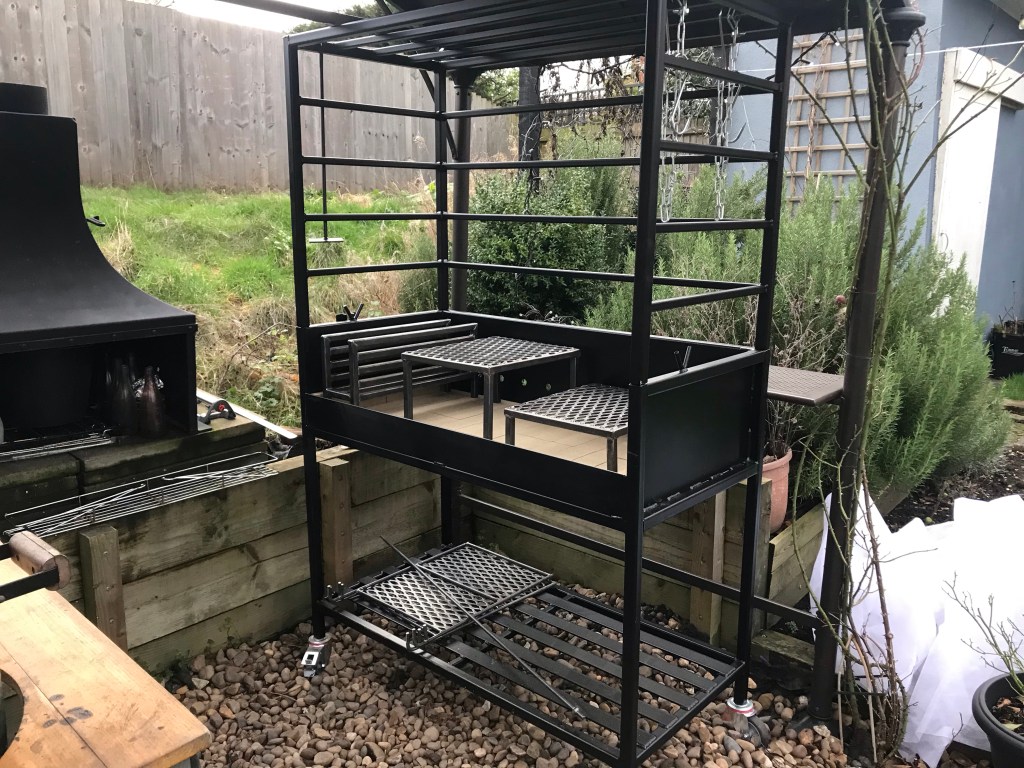
Wind forward to the present day and Lewis from Savage BBQ knocked on the door just after Christmas. He had bought with him the Fire Cage that I had been saving up for for a long time. If you wanted to picture my level of excitement, you could bring to mind the image of George Bailey when he pelts through Bedford Falls realising that he does have a Wonderful Life after all.
The cage itself consists of a steel fire pit lined with fire bricks, 2 standing grills of different heights and 2 floating shelves which hang on chains and butchers hooks and can be positioned above the fire in a variety of positions. Also included was a rotisserie attachment, an ember rake and a Brasero; basically, a small cage in which to build your fire. Everything feels super-sturdy and is powder coated in a reassuring black.
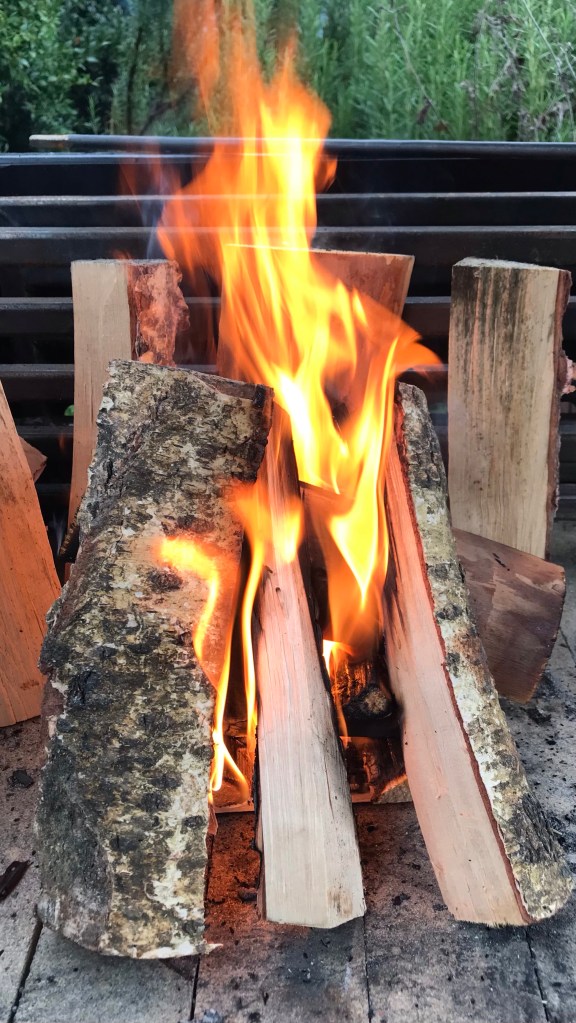
I used it on each of the three subsequent weekends and, like our trip to South America, it has been quite a transformative experience. First up, everything happens s l o w l y which is a beautiful way to cook. When you light your fire, it will be a good hour before it’s ready to go. I’ve used a mixture of birch logs and charcoal which need to burn down in the Brasero until embers fall out of the bottom which can then be raked, scooped and pushed into a large bed underneath the grills. The Brasero then gets topped up with more wood and charcoal to start burning down – you need to have everything to hand and monitor what is going on quite carefully.
Secondly, it is HOT. Given that it is January, this is a good thing, and it does make the outdoor experience a luxurious one. However, I discovered very quickly that heat-proof mitts or welder’s gloves are a must if a chap wants to keep all the skin he had when he started.
Once the ingredients were on, I found the whole cooking process both quite intuitive and splendidly interactive. I quickly fell into a rhythm of check embers, turn steak, turn tomatoes, check embers, add wood, turn peppers, turn steak, turn courgettes, check embers, add charcoal and so on. I loved it – it feels like primeval, proper live fire cooking. You move the grills to the fire, not the fire to the grills. With the Big Green Egg, the temperature is fairly stable and the control of the fire is done by little adjustments of the vents – once set it carries on for hours. The two grills represent contrasting ways of achieving the same thing and I really like that.
So far, I have cooked:
T-Bone Steak – hung on a meat hook over the fire and slightly undercooked it despite using the Meater to check the internal temperature. Would have gone down a bundle in France, but I gave it a last-minute sizzle in a pan to finish it off. It was lovely, especially the fillet side.
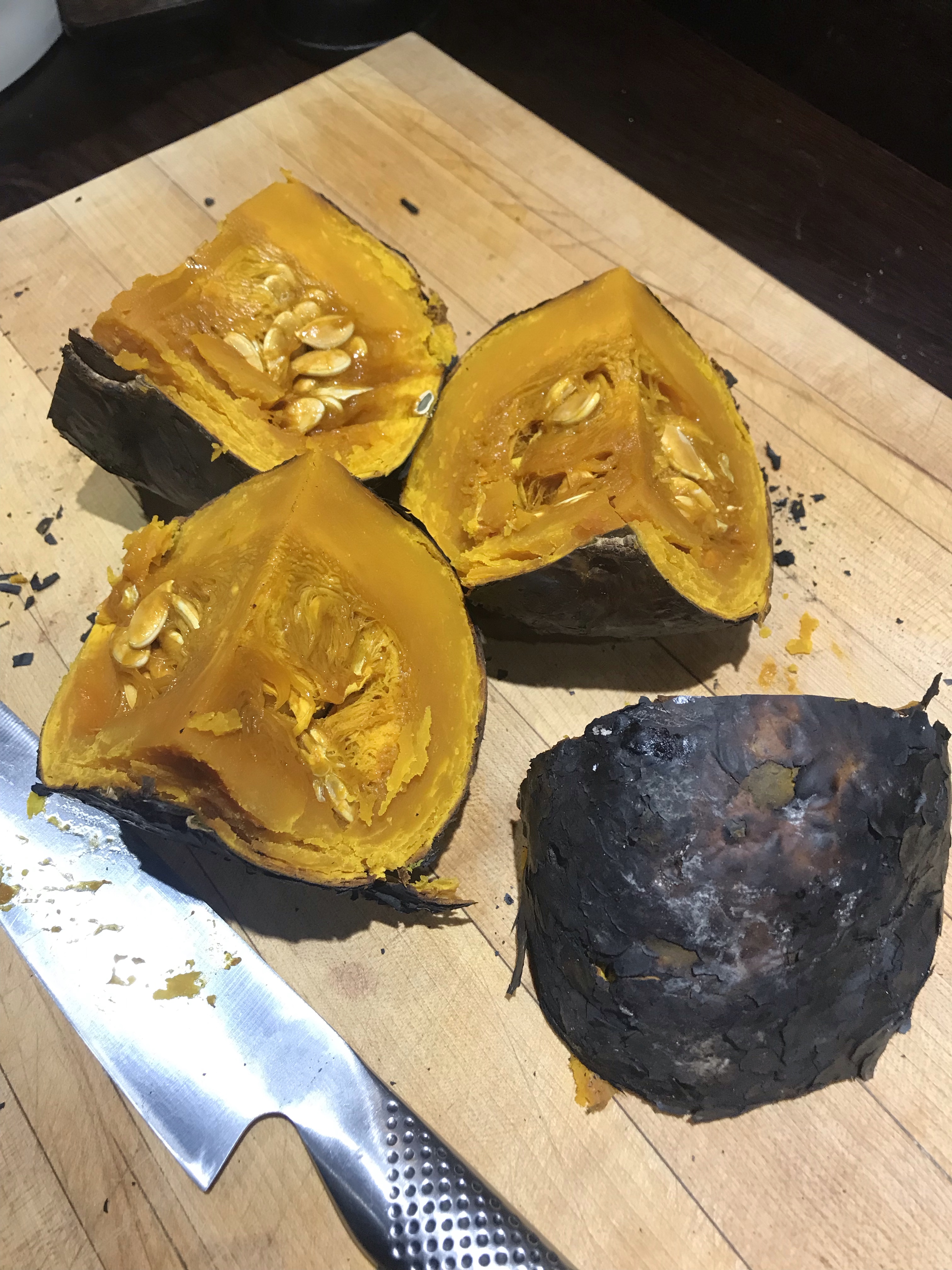
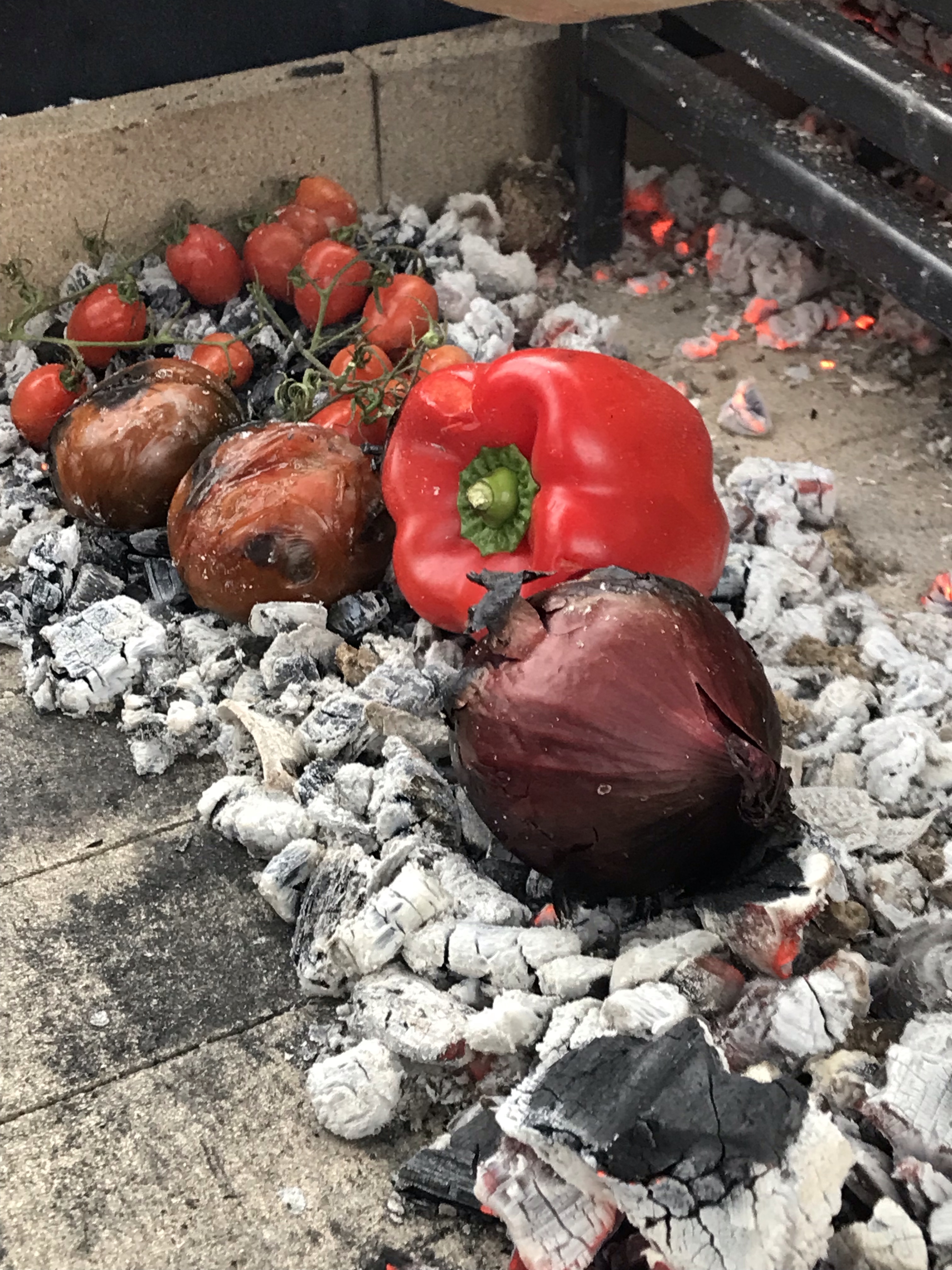
Squash. Interesting. Cooked in the embers until blackened all the way around. Took ages. When sliced, the seeds were scooped out and the flesh cut into cubes. The most interesting thing was the texture – clearly a lot of moisture had evaporated so the squash had a lovely firm, chestnutty flavour.
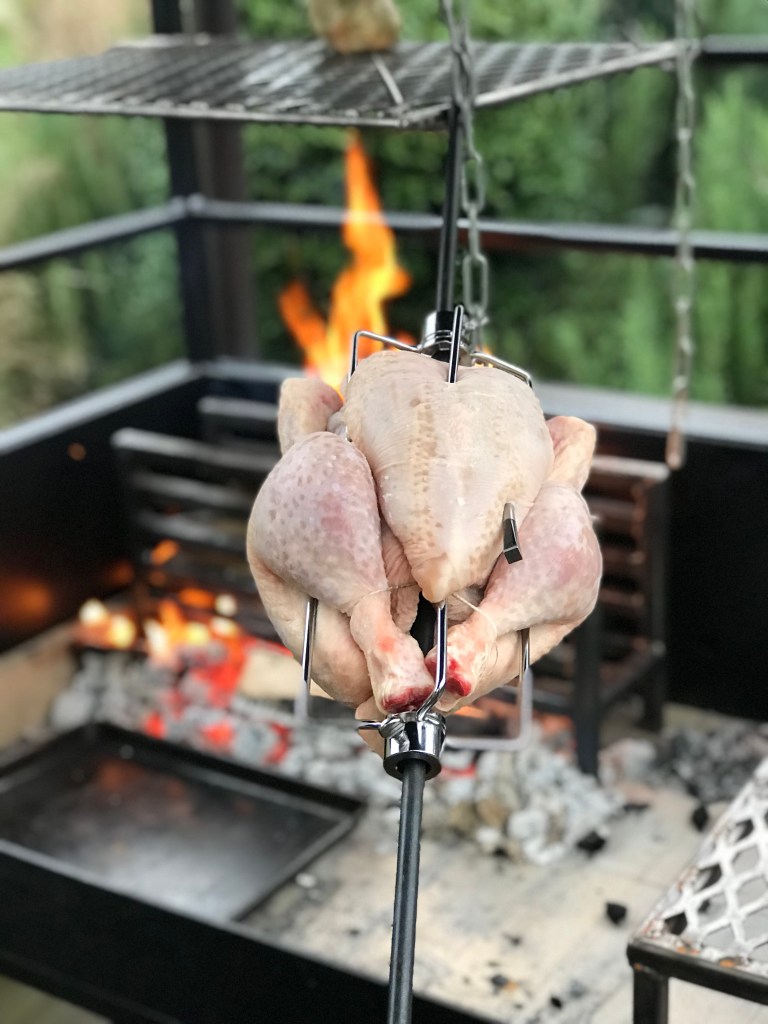
Rotisserie Chicken – perfect. Rotisserie is great fun, and the chicken was beautifully juicy. Used the Meater probe to monitor internal temperature. Basted with Salmeura (a brine flavoured with rosemary, garlic and bay leaf)

Lobster – low grill. Sliced it in half lengthways but slightly overcooked the claws and undercooked the body (had to stick under the grill as we were starving). It was absolutely delicious served with an indecent amount of garlic butter though.
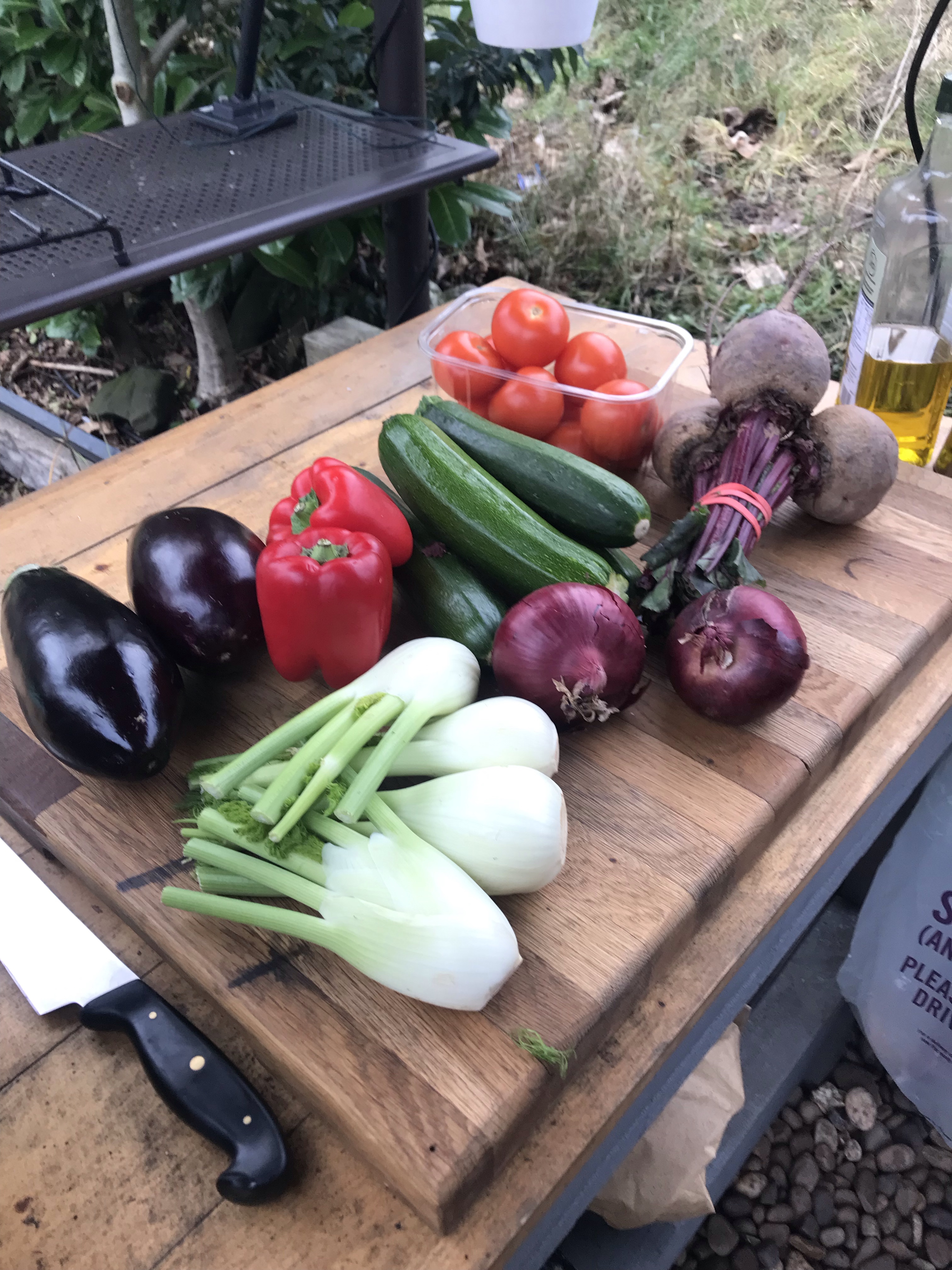
Salsa Roja – have done this twice and each time it has been great. Tomato, peppers, red onion and chillis all blackened in the embers, skinned and then blitzed together with salt and olive oil. Could use it as a dip with tortilla chips, or as a sauce for fish or pasta.
Baba Ganoush – amazing. Aubergines blackened in the embers, garlic gently smoked on a high shelf. Scoop out the cooked aubergine and plonk in a sieve to drain the excess liquid. Toast cumin seeds, crush them up and add them to a blender. Blitz together with the aubergine and garlic. Add a good glug of extra-virgin olive oil. Needs a good pinch of salt.
Grilled courgette – higher grill. Amazing. Chop into slices, plonk in a bowl. Pour a swig of olive oil over them and shake together with a good pinch of salt and pepper. Grill until nicely scorched and then turn to do the other side. Great hot as a side dish, but also very interesting when cooled and added to a salad.
Fennel – as thinly sliced as I could get it. Tossed in oil and cooked on the low grill to the point of almost being totally charred. I combined them with a load of the courgettes and made a dressing of oil and lemon juice. This was absolutely delicious!
Beetroot – cooked in the embers like the other veg. Like the squash, took a long time. Once cooked, I let it cool then cut into smallish cubes, added a couple of spoonfuls of capers, some roughly chopped parsely and made a really mustardy vinaigrette. It was great, but a bit of a red-fingered faff in all honesty.
So there we are – the first forays into a new branch of cooking. It’s a splendid way of getting into the garden and immersing yourself into the process; a lovely Sunday afternoon thing. I absolutely love the way vegetables taste when using the Cage and, in my mind, the vegetable dishes I’ve made have definitely been the most successful. It takes quite a bit of wood and charcoal to keep the fire going, so it makes sense to cook as much as you can to make the most of the energy you have created. The meat and fish I’ve done has been slightly flawed, yet still great, but I think I have a bit of experimenting to do to really understand the time it takes to cook different cuts, and how to bank to embers to best effect. I need to be braver and let things cook for longer I think – it’s bit different to the way to grill using the Egg. From the reading I’ve done, the best Asadors grill super-slowly to what we might term a well-done temperature which lets the intramuscular fat render down and into the meat leaving the result juicy, not leathery as you might expect.
The search for perfection will continue with Francis Mallman, Niklas Ekstedt and Lennox Hastie as my guides…
 Live Fire Journal