A lot has happened recently which is why this is my first post for a couple of months. Splendidly, a lot of what has been happening relates to being back at work in a (relatively) COVID-restriction free environment which has been great. From a Live Fire Journal point of view, it has been less good as I have a bit less free time on my hands. Nevertheless, I have been cooking some great food on the Big Green Egg and also broadened my cooking horizons a bit through getting a new book and attending a day at a live fire cooking school. More of these in a later post.
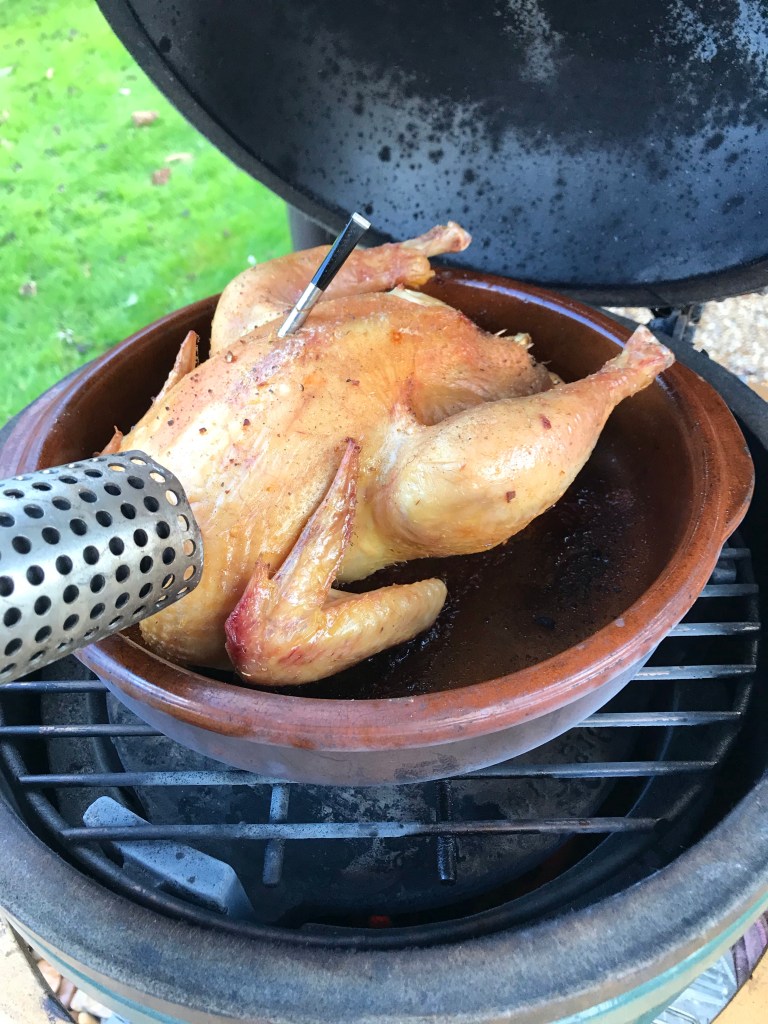
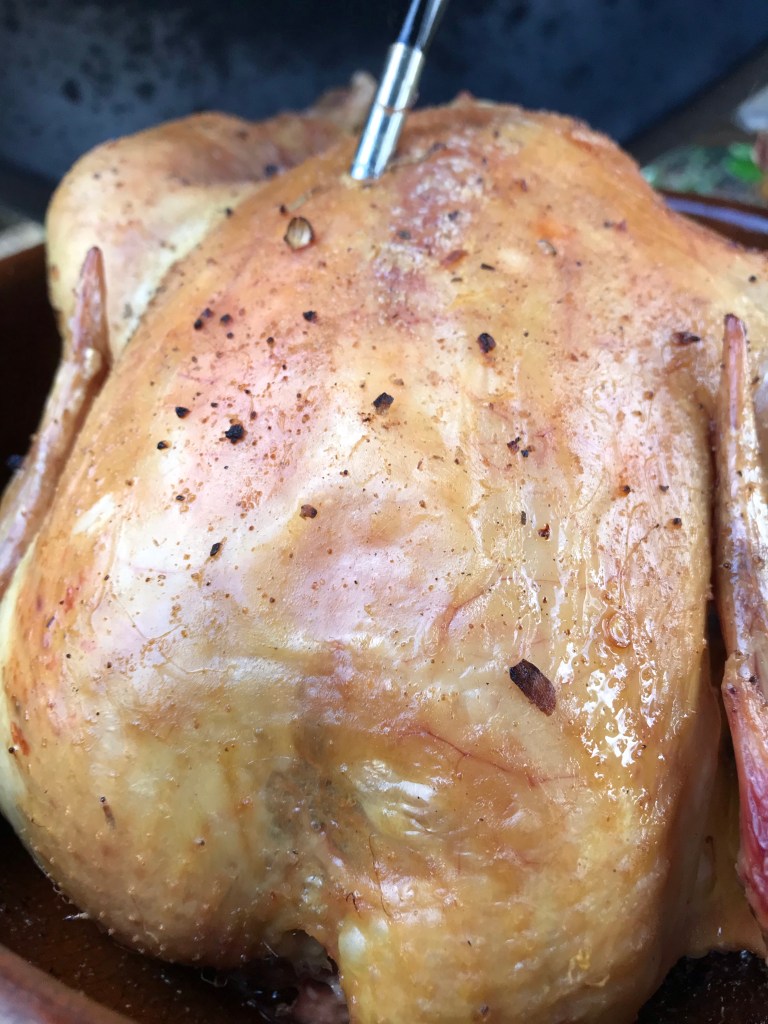
Looftlighter Chicken is a thing I had been meaning to do for absolutely ages, but just hadn’t had a whole chicken to do it with. Roast chicken in the Egg is one of those things which is so simple, yet the results are so joyously delicious that I wonder why I don’t do it every weekend. It’s a Live Fire cooking process which is no different to roasting a chicken in the oven, you set the Egg to cook indirectly at around 180°c and away you go. A family sized chicken of about 1.5kg will take about 80 minutes to cook (aim for a minimum of 74°c on your meat thermometer) and the results have always been soft, juicy and flavourful. If you want to, you can add a few smoking chips to your charcoal, but be careful here as a little smoke goes a long way and it is easy to overpower your bird. Doing a chicken this way makes a perfect Sunday roast with the added bonus that the slightly smoked carcass makes a brilliant stock with which to make a soup or risotto/paella. However, I wanted to up my chicken game.
I have been reading up about cooking pork in the Egg and going through all the methods people go through to try to ensure the perfect crispy crackling. I read about dry brining, wet brining, pouring over boiling water and/or boiling oil and so on. You name it, someone has tried it and probably made a YouTube video about it. The roast chicken cooked by my Mum on a Sunday always had perfect crispy skin which, after a bit of chilly mini rugby in the morning was a joy to return to – a beautiful evocative memory. Now the one downside of using the Egg is that you tend to get slightly flabby skin which has a lovely smoky flavour, but none of the satisfying mouth feel.
The day before cooking, I took the chicken out of its packaging and dried the skin with kitchen paper. Next, I scattered a couple of pinches of salt over it and gently rubbed it in so it stuck. After that, I put a couple of sheets of kitchen paper on a roasting tray, put a wire rack on top and put the chicken on top of that; the whole lot went into its own shelf in the fridge. The aim was to let the chicken sit overnight so that the salt could draw extra moisture and let the cold, relatively arid fridge atmosphere add a further element of dryness to the skin. A note of caution here – basic food hygiene tends to recommend that raw chicken should be covered and it should be sat as low down as you can get it so that any drips avoid contaminating other foods around it. Please make sure you are careful if you try this yourself.
The next day was interesting, in that there was no obvious difference in the appearance of the chicken, except the lack of the sort of residual condensation you get from plastic packaging. Anyhow, I cooked the chicken as described above, at more like 200°c to try to get a bit of extra heat to caramelise the outside.
It worked.
As the chicken came up to temperature, a quick tap with the back of a knife gave a very satisfying sound and it smelled amazing. I had, however, a further trick up my sleeve to get it even better; a Looftlighter. If you have not come across these, they are amazing. They look a bit like an industrial grade curling iron and they are used to get your charcoal lit and burning fiercely by blowing a jet of hot air at about 1200°c. This, I thought, would be a great way of finishing my chicken off. Carefully at first, I trained the hot air towards the chicken from a distance of about 30cm and nothing really happened. However, as I got a bit braver and moved the tip nearer, the skin started to contract and I could see little char marks starting appear on the raised bits of skin. It was very satisfying indeed.
I made a great gravy out of the smoky resting juices and served the chicken with roast potatoes, braised carrots and cabbage. As the mists and mellow fruitfulness of Autumn are descending on us, it made a lovely meal.
Whilst this was a fun thing to do, I’m fairly convinced the main reason for the crispiness was down to the salting and drying out period in the fridge. Whilst the Looftlighter is a brilliant tool, I think it was more the icing on the cake, rather than a remedy for skin that hasn’t crisped up in the first place.
 Live Fire Journal